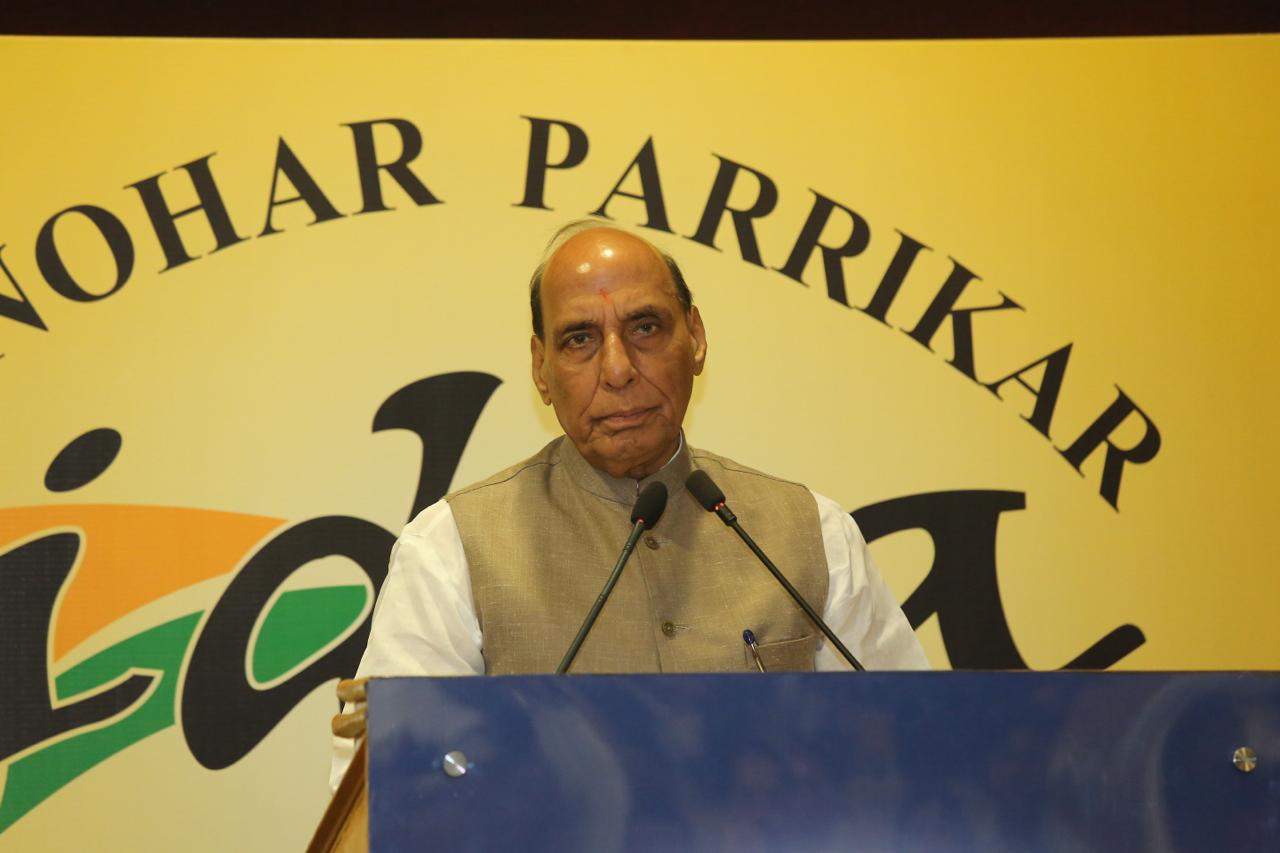
India and ASEAN have shared close ties for centuries: Raksha Mantri
Text of RM’s speech at the inaugural session of the ASEAN–India Defence Think Tank Forum in New Delhi.
It is a pleasure to welcome you all to the first ASEAN–India Defence Think Tank Forum.
I congratulate MP-IDSA and its team for bringing together experts and policymakers from our two regions. This Forum grew out of my informal interaction with ASEAN Defence Ministers in Kuala Lumpur last year. I am pleased that this idea has now taken shape.
I hope this meeting will do more than just exchange views. I hope it will help us identify practical steps that our governments and institutions can take together.
Friends, India and ASEAN have shared close ties for centuries. India’s ties with Southeast Asia go back thousands of years and are rooted in our shared history, culture, trade and ideas. For centuries, our people have connected through maritime routes across the Bay of Bengal, exchanging goods, knowledge, art and traditions. The influence of Indian philosophical and spiritual traditions can also be seen in the temples, monuments, languages and cultural practices of the region. The ancient kingdoms of India, including the Cholas and Pallavas, maintained links with Southeast Asia through trade and maritime contact. Today, this civilisational bond provides a strong foundation for our modern partnership. As we work together for peace, stability and prosperity in the Indo-Pacific, we draw strength from a history that reminds us that India and Southeast Asia have long been connected by the sea, by culture and by the spirit of friendship. They are also a strong foundation for our future.
Today, India and ASEAN share a clear interest in peace, stability, prosperity and an open, inclusive Indo-Pacific. For India, ASEAN is central to our Indo-Pacific vision. India’s Act East policy, SAGAR and MAHASAGAR vision advocate open, multipolar cooperation and we align these approaches through ASEAN-led mechanisms. Our Act East Policy is a long-term commitment to working with Southeast Asia as an equal partner.
Our region is changing rapidly. Strategic competition is growing. At times, actions at sea create pressure and uncertainty. We also face terrorism, cybercrime, piracy, trafficking, illegal fishing, climate-related disasters and risks to vital supply chains. These challenges are often borderless. No country can address all of them alone.
It is in this context, that our collective objectives should be to build trust, respect for each-others sovereignty, follow international law and keep channels of dialogue open. Differences should be discussed early and peacefully, before they become disputes. We should support a regional order in which countries can work together without being forced to choose sides.
This is why India attaches great importance to ASEAN-led platforms, like ADMM-Plus. India’s approach and ASEAN’s Outlook on the Indo-Pacific can complement each other. We should strengthen cooperation, not create competition between regional forums.
Friends, the seas do not separate us, they connect us. The Indian Ocean and the waters of Southeast Asia are part of one connected maritime space. Through these waters move our trade, energy, people and essential goods. Keeping them safe is therefore a shared responsibility. Strengthening Maritime Domain Awareness, interoperability, and collaboration in underwater awareness will be key to ensuring a stable, rules-based maritime order.
The designation of 2026 as the ASEAN–India Year of Maritime Cooperation, gives us a timely opportunity to turn this shared interest into practical action. We should improve the sharing of maritime information, strengthen cooperation among our navies and coast guards, and build the ability to respond together to emergencies. We should also work against piracy, trafficking, illegal fishing and other threats, in accordance with international law.
I would encourage experts present here to identify a few achievable steps. These could include regular exchanges between maritime information centres, more professional interactions among naval and coast guard personnel, and practical exercises focused on search and rescue, disaster relief and protection of important maritime infrastructure. We should also examine gaps in underwater awareness and in our ability to respond to activities that fall below the threshold of open conflict.
Our cooperation must also prepare us for natural disasters. Cyclones, floods, rising sea levels and extreme weather can damage ports, disrupt trade and threaten lives and livelihoods. Humanitarian assistance and disaster relief should therefore be a regular part of our defence dialogue. We can learn from one another, share best practices and improve coordination before a crisis occurs.
Friends, another important area is defence technology. New technologies are changing how countries protect themselves. Artificial intelligence, drones, cyber capabilities and space-based systems are becoming increasingly important. Recent conflicts have also shown that relatively low-cost drones can challenge much more expensive defence systems. We need to respond with practical, affordable and adaptable solutions.
India believes that innovation should not remain limited to a few large organisations. Start-ups, universities, research institutions and smaller companies can all contribute. India’s initiatives like iDEX, Technology Development Fund have created a way to collaborate on our defence needs with innovators. I invite the think tanks present here, to explore how Indian and ASEAN innovators could work together on clearly defined problems, such as counter-drone systems, cyber defence, maritime surveillance and disaster response.
We should consider joint research projects, shared testing opportunities, exchanges among young researchers and carefully designed innovation challenges. Such cooperation must also protect sensitive information, respect intellectual property and ensure that technology is shared responsibly. The aim should be to develop useful capabilities while strengthening trust between our countries.
Another area is defence industrial cooperation. India’s Atmanirbhar Bharat initiative is about building stronger domestic capabilities, but self-reliance does not mean working in isolation. It can create opportunities for trusted partners to design, build, maintain and improve equipment together.
India is ready to explore cooperation with ASEAN partners in areas such as patrol vessels, radars, air-defence systems, helicopters, drones and other technologies, according to each country’s needs and priorities. Beyond the purchase of equipment, we should look at co-development, co-production, maintenance, repair and overhaul, training and long-term technical support. These arrangements can build local skills, support industry and make supply chains more reliable.
I encourage our researchers to look closely at what makes such partnerships work: clear requirements, reliable after-sales support, appropriate technology safeguards, fair sharing of responsibilities and benefits, and opportunities for local companies and skilled workers. Our goal should be lasting partnerships, not one-time transactions.
Friends, this brings me to the special role of think tanks. Governments need good analysis, but they also need ideas that can be put into practice. Think tanks can help us understand one another’s concerns, identify common ground and offer options before challenges become crises.
I would like to suggest some practical outcomes from this Forum.
First, let us develop a joint India–ASEAN research agenda on maritime security, cyber threats, emerging technologies, disaster response and defence-industry cooperation.
Second, let us encourage regular exchanges among researchers, including young scholars, through fellowships, visiting programmes and joint publications.
Third, let us identify a small number of pilot projects—for example, a tabletop exercise on maritime disaster response, a joint study on counter-drone solutions, or a research project on secure maritime information sharing.
Fourth, let us promote Track 1.5 and Track 2 dialogues, so that researchers, practitioners and policymakers can continue their discussions between formal meetings.
Let us prepare a concise set of recommendations after this Forum, identify institutions that could take them forward, and review progress at a future meeting. We should measure success not only by the quality of our discussions, but also by what we do afterwards.
These are suggestions for your consideration. I would welcome ideas from all participating countries, because cooperation is strongest when it reflects the needs and experience of every partner.
India seeks an Indo-Pacific where all countries—large and small — can make their own choices, protect their interests and pursue development in peace. We believe that security is strengthened when countries build capacity together, respect international law and maintain trust through dialogue.
India stands ready to work with ASEAN as a reliable and equal partner. Let this Forum help us move from shared understanding to practical cooperation—from discussion to joint research, and from joint research to solutions that improve the security and well-being of our people.
I wish you productive discussions over the next two days. I hope this Forum will deepen our friendship and contribute to peace, stability and prosperity across our shared region.
Thank you.